
tmj / tmd
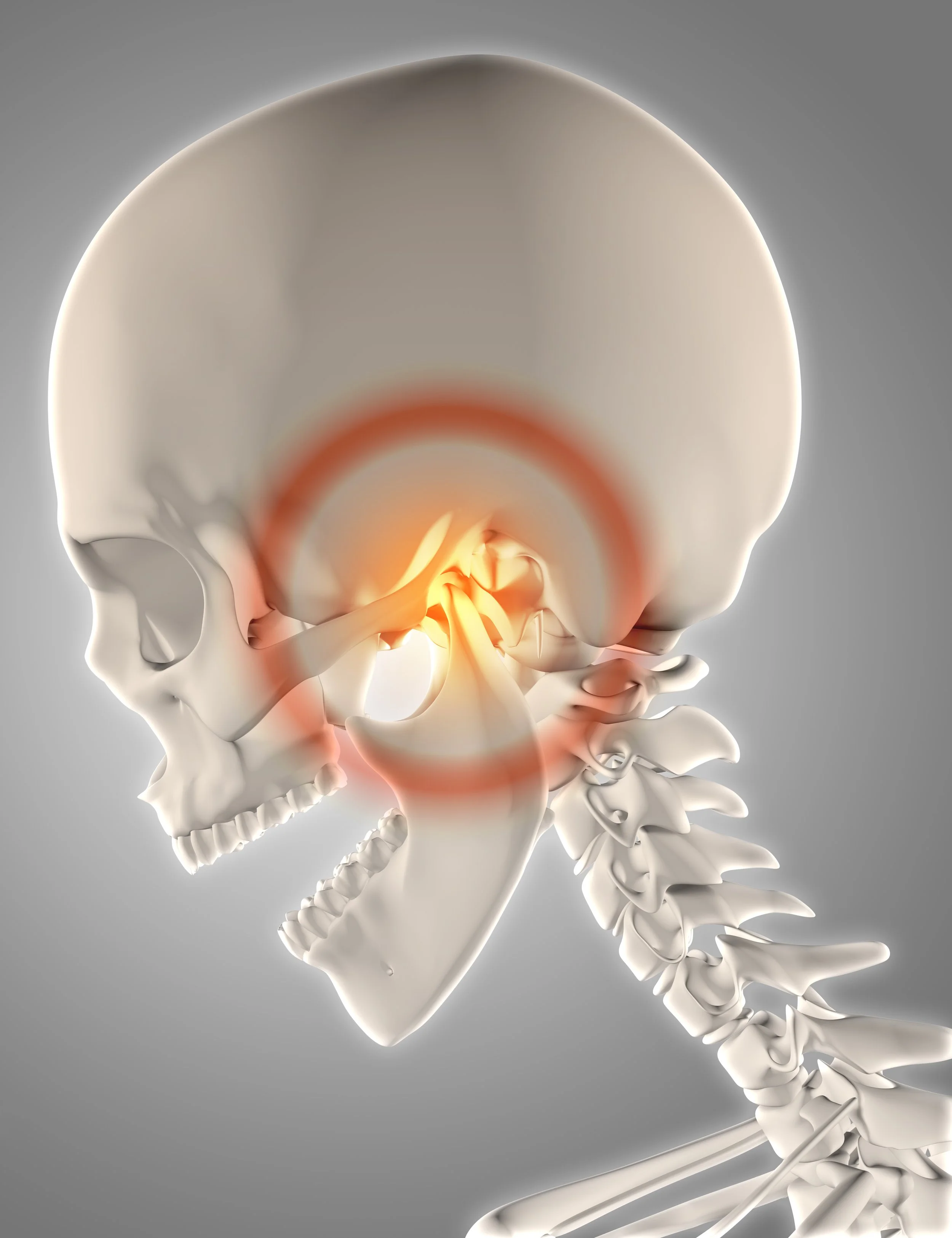
TMJ, the term actually means Temporomandibular Joint – or your jaw joint. The more accurate term is Temporomandibular Disorder (TMD) or Temporomandibular Joint Disorder (TMJD)
TMD can lead to severe conditions, such as headaches, poor posture, shoulder and neck pain, and a general detriment to the patient's quality of life and well-being. Hidden underneath these symptoms are generally a negative impact on the blood flow to the brain as well as diminished airway and often night-time sleep problems.
The symptoms number in the hundreds and don’t all affect people equally which makes an accurate and consistent diagnosis very difficult. In fact, this condition is poorly understood by most dental professionals as well as physicians and other health care providers.
common symptoms include
Migraine pain
Facial pain
Jaw joint pain
Back, neck, cervical pain
Postural problems (forward head posture)
Pain in the face
Headaches (tension-type)
Pain behind the eyes – dagger and ice pick feelings
Multiple bites that feel uncomfortable or, “off,” and continually changing
Clenching/bruxing
Sensitive teeth to cold
Deviation of the jaw to one side
The jaw locking open or closed
Ringing in the ears, ear pain, and ear congestion
Sinus like symptoms
Dizziness or vertigo
Visual Disturbances
Tingling in fingers and hands
Insomnia -difficulty sleeping

TMD explained by Dr. Curtis Westersund
faq’s
-
Along with an extensive review of your symptoms and health history, Dr. Tsar will perform a thorough examination of your teeth, the soft tissues of your mouth, your bite, posture, and your airway.
Dr. Tsar also uses specialized computerized equipment such as:
Computerized Analysis
Sonography measures vibrations in the jaw as it opens and closes to identify where the joint is not functioning
Electromyography (EMG) evaluates the health condition of muscles and the nerve cells that control them.
Jaw tracking Magnets draw a visual model of how the jaw moves to help identify abnormalities.
Transcutaneous electrical nerve stimulation also known as TENS, electrical stimuli are administered to relieve muscle spasms.
3D imaging (CBCT)
-
An Orthotic or splint to stabilize the joint
TMJ exercises
Repositioning the teeth with Braces or teeth aligners
Nightguards to prevent clenching and bruxism
Dental restoration
Computerized bite adjustment
A combination of treatment modalities
-
Dr. Natalia Tsar is one of the few dentists on the East Coast of Florida to offer neuromuscular Physiologic dentistry. Neuromuscular Physiologic dentists seek to establish a harmonious relationship of the teeth, muscles, jaw joints & airway helping to relieve problems that occur with misaligned bites such as headaches, migraines, neck pain, jaw pain, and chipped or fractured teeth. Her specialized training in physiologic dentistry has put her in a unique position to help her patients with sleep apnea, TMJ disorders, and more advanced restorative dental treatment.
additional services

implants
inlays & onlays